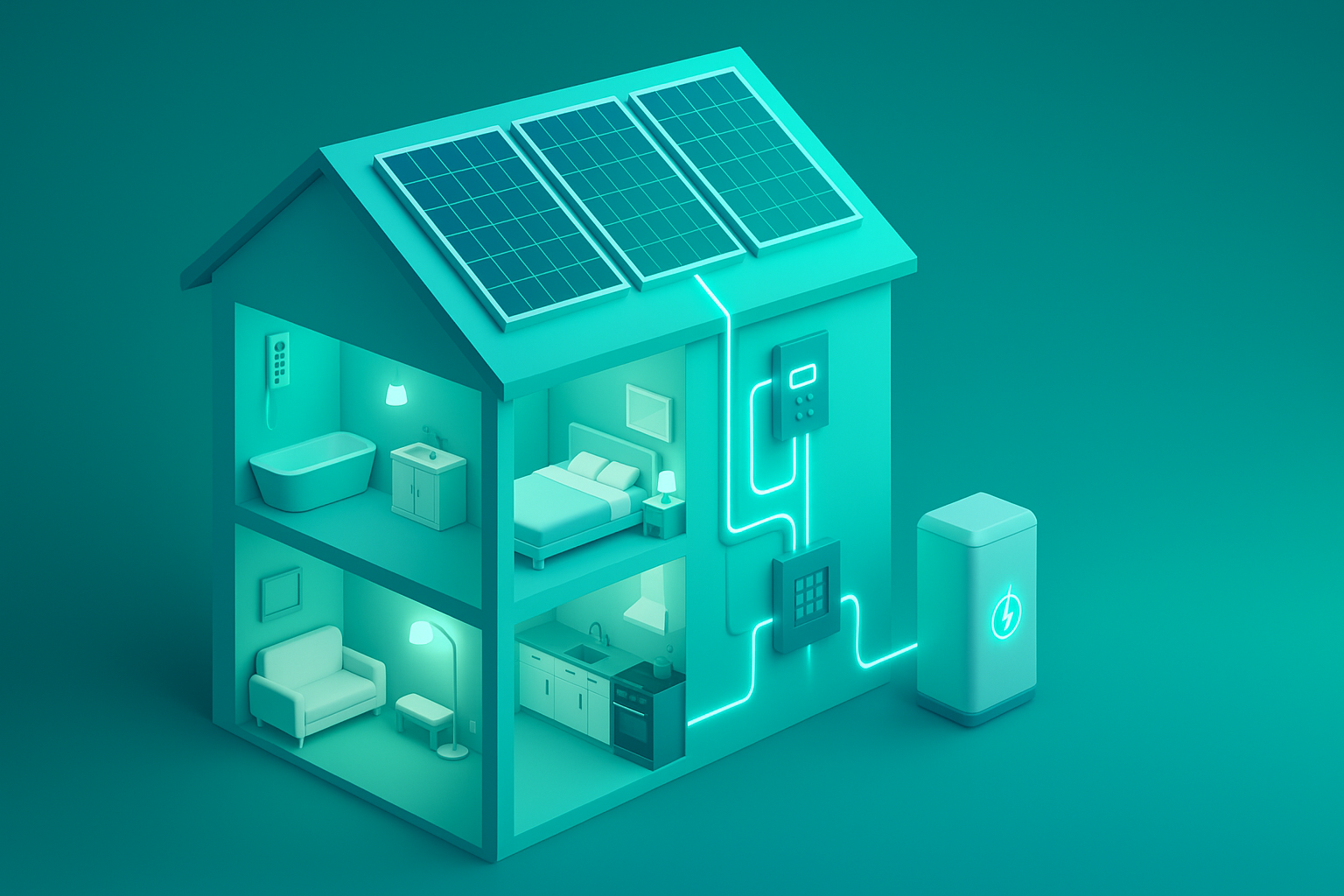
For residential
Battery for residential buildings
- Increase solar self-consumption and reduce electricity costs.
- Flatten power peaks from EV charging and heavy loads.
- Backup for selected circuits during outages.
Reduce peak demand, store solar energy and improve energy cost control. We deliver battery systems for professional project teams with clear documentation and a fast path from assessment to installation.
Need a technical discussion first? Talk to a battery specialist
Read also solar profitability for commercial buildings, battery storage and references.
Two clear entry points for faster qualification. Choose residential or commercial and continue with the right solution.
For residential
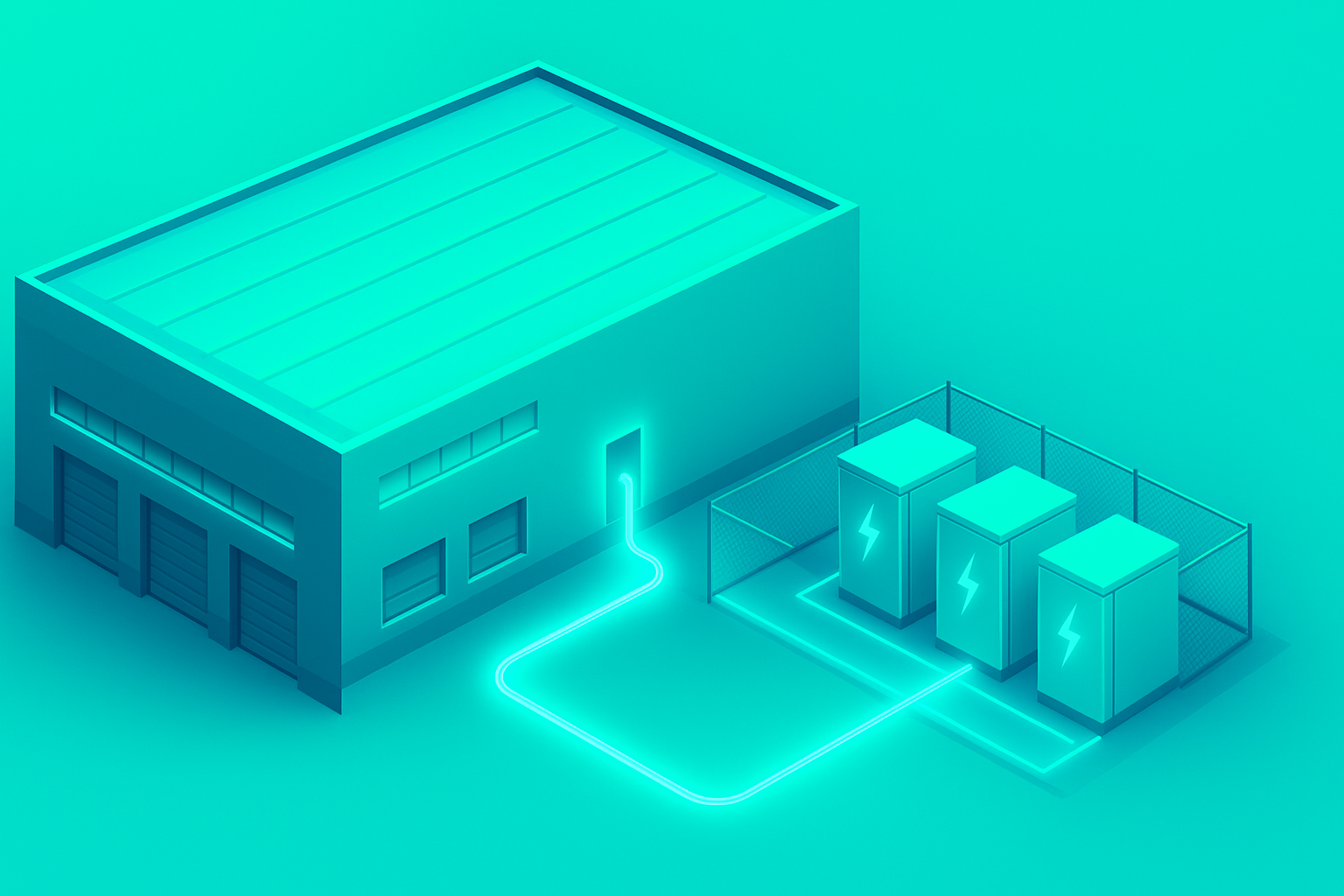
For commercial buildings
Capacity calculator
Choose residential or commercial and move the slider. We calculate recommended capacity, suggest a product and show the next step.
Modular high-voltage residential battery - 20.48 kWh per module, up to 163.84 kWh per stack.
*Indicative estimate. Final battery sizing depends on power demand, load profile, inverter and installation setup. We review all numbers before final quotation.
The most cost-effective battery solution for commercial buildings, with high performance, advanced safety and better warranty terms than traditional systems.
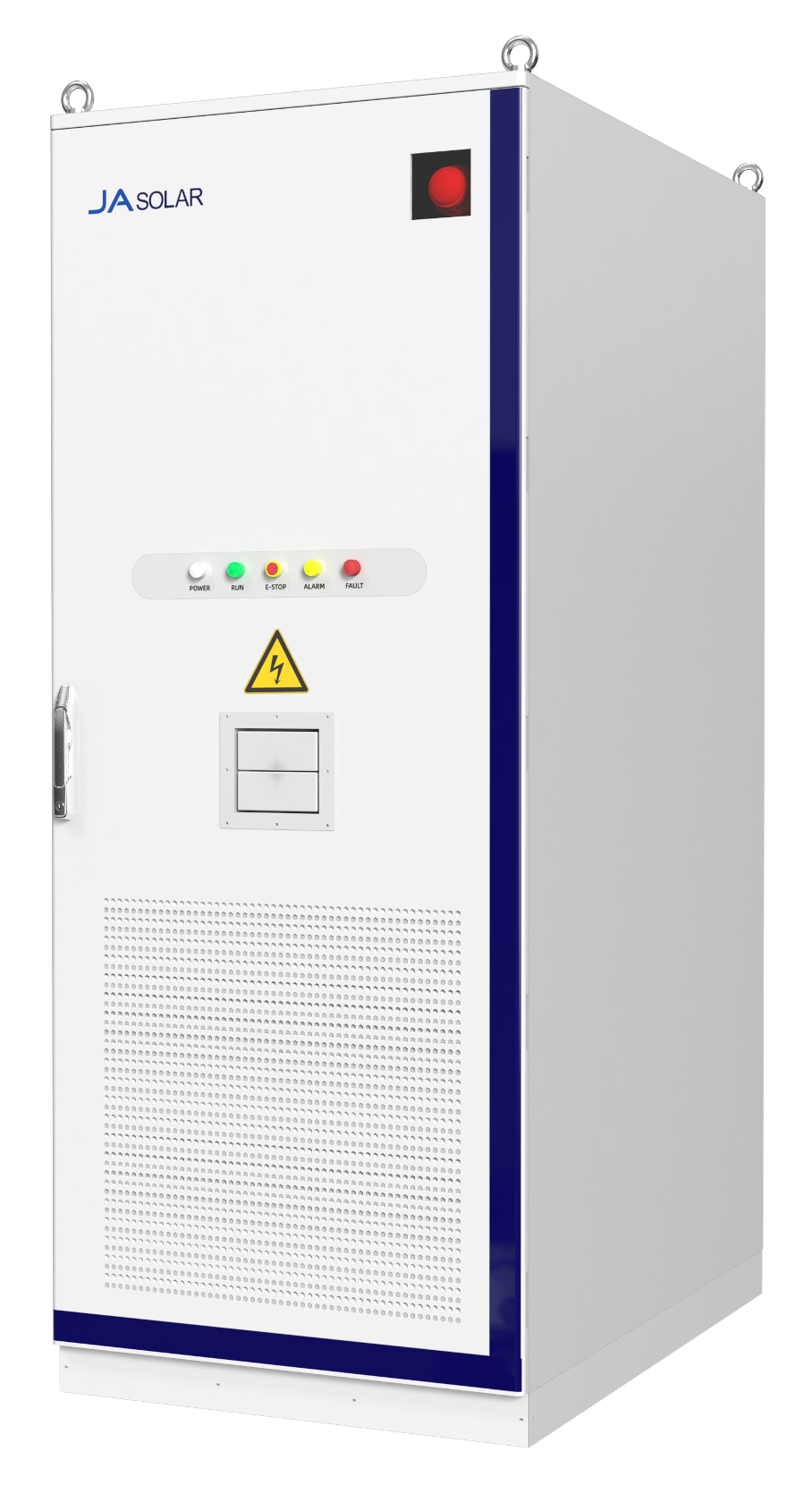
*Specifications are indicative and may change. Final commercial sizing depends on load profile, grid conditions, demand tariff and intended use (peak shaving, backup, load shifting).
Scalable high-voltage residential battery, seamless with Solplanet 3-phase hybrid inverters.
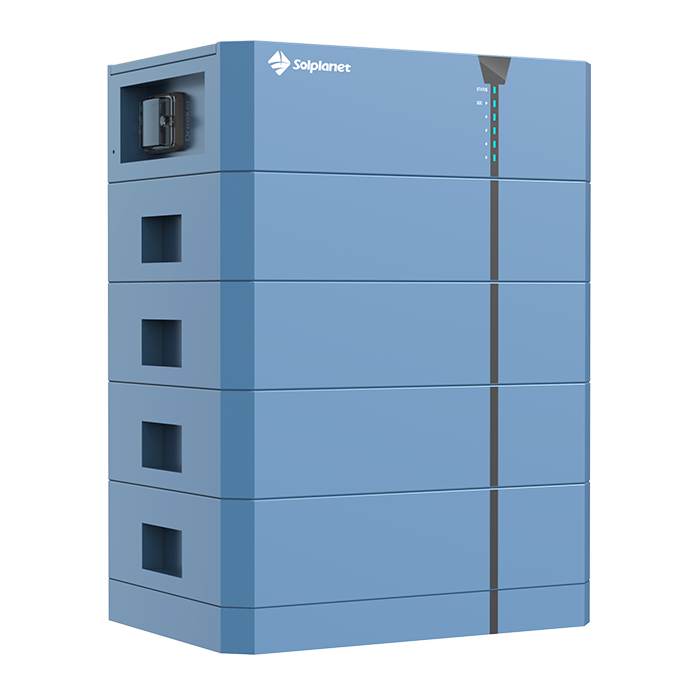
*Specifications are indicative and may change. Correct residential sizing depends on consumption, load profile, inverter and required backup level.
All-in-one commercial battery with 125 kW power and 261 kWh capacity, suited for peak shaving, load shifting and backup in commercial buildings.
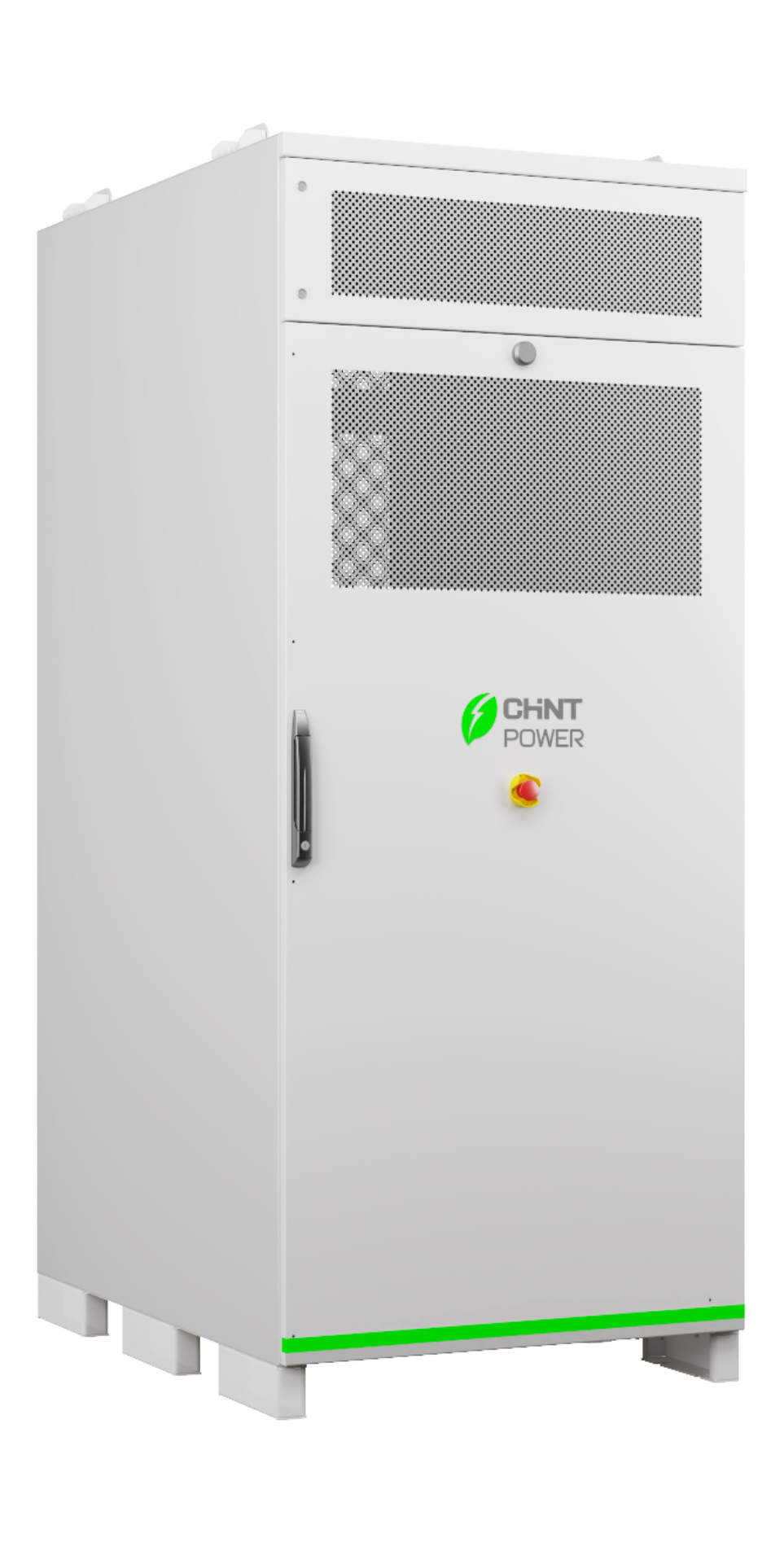
*Specifications are indicative and may change. Final CHINT sizing depends on load profile, grid conditions, demand tariff and intended operating strategy.
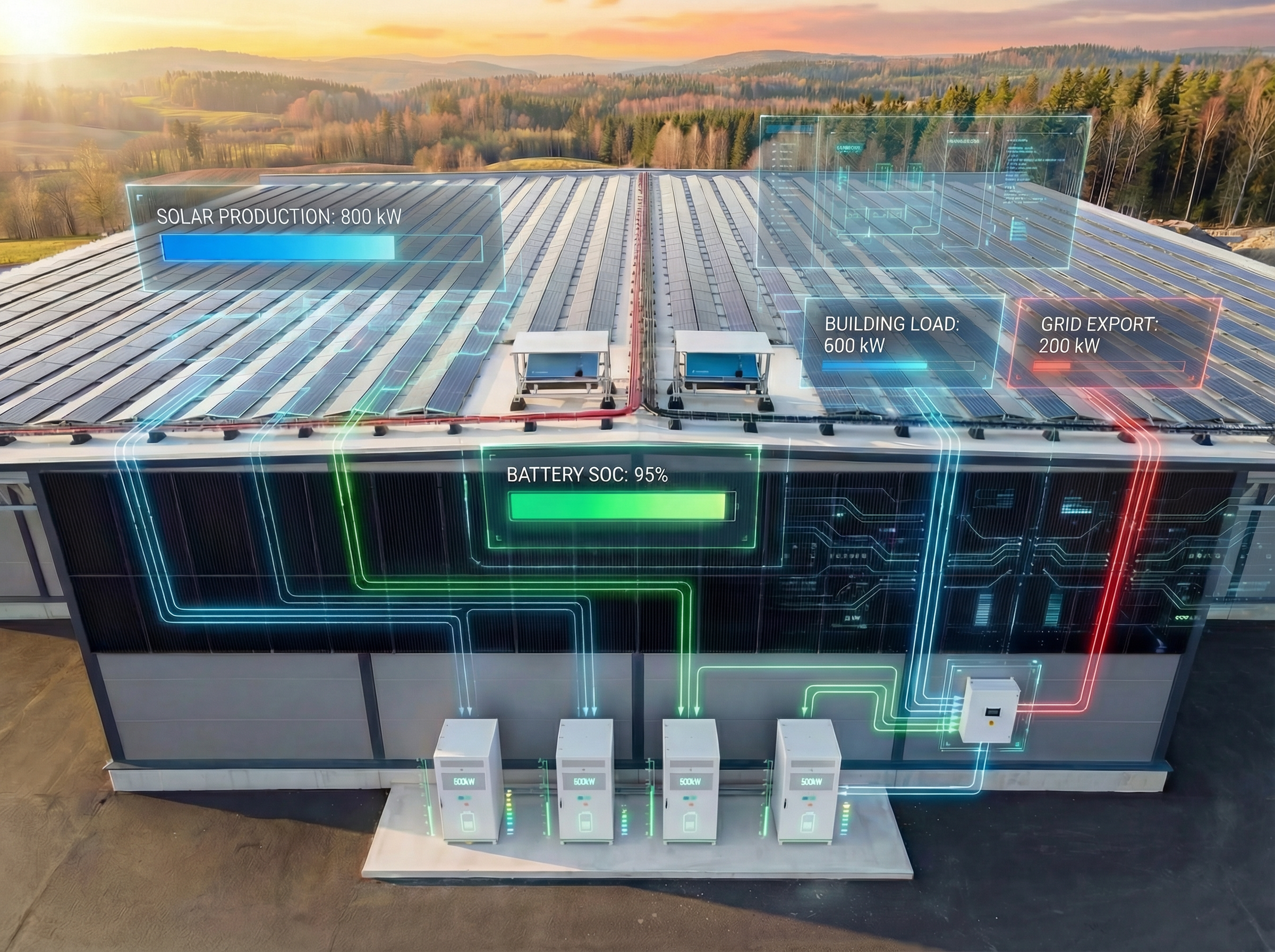
Battery storage creates value when integrated with solar, inverter and energy management. This gives better demand control and higher use of local generation.
Produces energy during operation.
Converts and distributes power in the system.
Stores surplus and discharges during peaks.
Optimises load shifting, flexibility and operation.
Smoother demand profile and better cost control.
We use PRELECT as the EMS platform for load balancing, flexibility and battery optimisation.
Battery economics depend on electricity prices, demand tariffs, load profile and backup requirements. Below are practical guidelines for Norwegian conditions.
Falling battery prices and maturing technology make battery storage relevant in more use cases in Norway. Profitability depends on correct sizing, control strategy and tariff setup.
Batteries can be charged at low prices and used or sold at higher prices. After 1 October 2025 day-ahead settlement runs in 15-minute intervals, increasing the need for algorithmic control.
For commercial customers, batteries can lower the monthly demand peak and demand tariff. For households, a similar mechanism applies through capacity steps.
In markets such as Euroflex and NODES, DSOs buy flexibility for congestion and voltage control. This can create extra revenue with verifiable controllable response.
Batteries can deliver FFR, FCR-N/D, aFRR and mFRR when prequalification, volume requirements and telemetry are met. This requires robust EMS, test procedures and operational control.
Chemistry (often LFP), cycle life, temperature tolerance, warranties, fire safety and EMS must be assessed together. Fire concepts are dimensioned for thermal runaway risk using aerosol, water mist, inert gas or combinations depending on design.
Properly engineered battery storage can reduce costs, increase solar self-consumption and create revenue from flexibility and reserve markets. We use PRELECT in the operational control core.
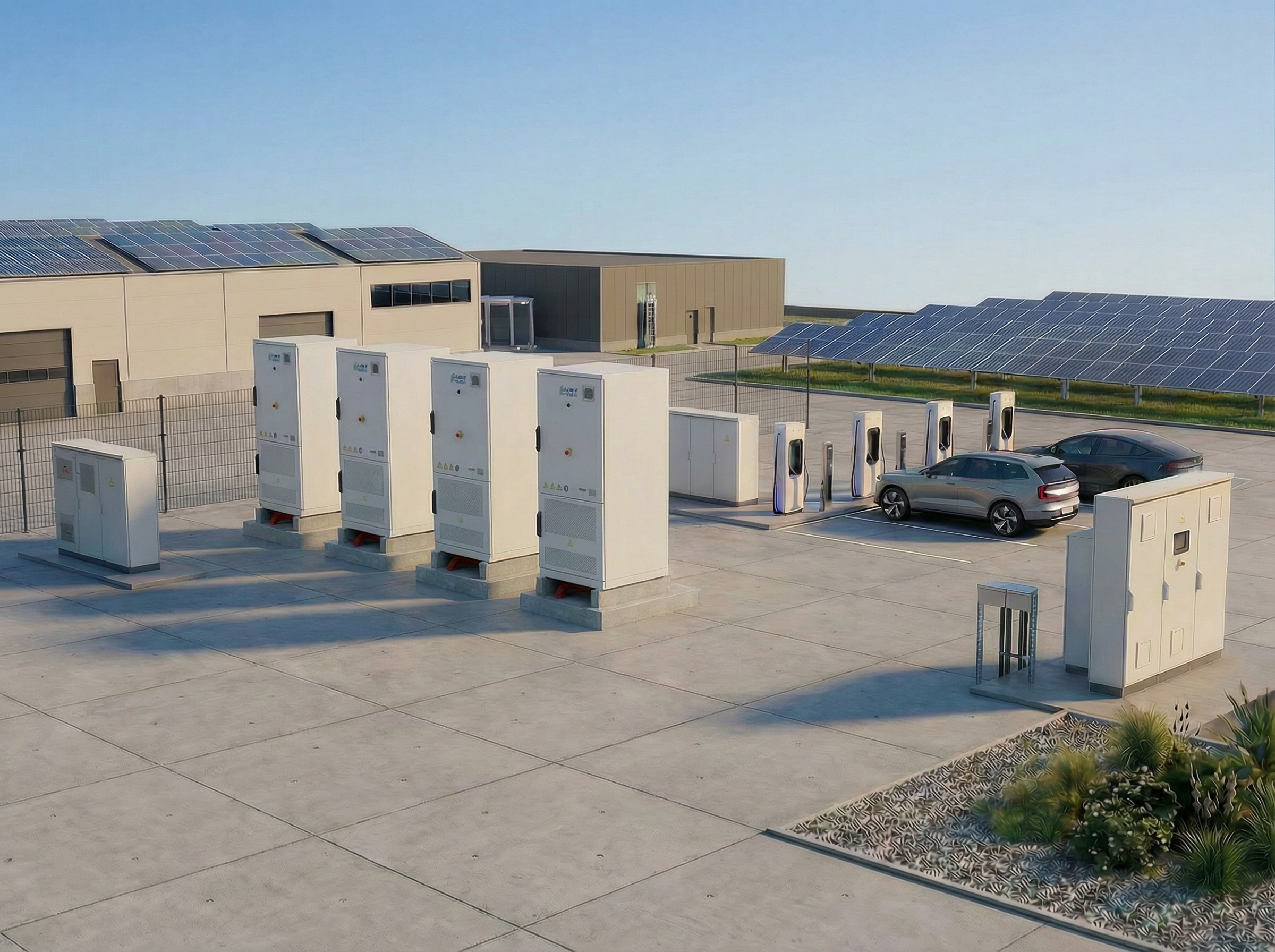
Sun Net Norway is a battery systems distributor and provides products, product information and support to approved installers and electrical contractors.
All sizing, engineering, installation and commissioning are performed by authorised installers.
We support with product information, guidance and experience when selecting battery systems based on customer needs. This forms the basis for the installer's engineering and final sizing.
The installer evaluates capacity, power, placement, safety and technical requirements, and prepares required documentation for DSO and authorities. Sun Net Norway provides technical product data and specifications as support.
The battery solution is delivered from Sun Net Norway to the selected installer, ready for mounting and connection. Products are prefabricated and manufacturer tested (FAT) according to supplier specifications.
Installation, commissioning, service and maintenance are handled by authorised installers. Sun Net Norway can assist with product support, documentation and supplier dialogue when needed.
Yes. Battery systems are normally reported and engineered by an authorised installer. We support with documentation and coordination.
Yes, typically for selected critical loads. We define backup scope during pre-study and configure a safe solution.
The solution uses multi-layer safety and follows manufacturer requirements and Norwegian standards. Placement and safety distances are engineered and documented per project.
For commercial buildings, peak shaving and load shifting can create strong value even without solar. We assess the best setup for each project.
See also: Solar profitability · Power management and demand tariffs · References
Do you have a specific project? Send us load data or a short description.
Send project dataSend us load data or a short project description and we will recommend a battery setup adapted to your tariff, load profile and building.